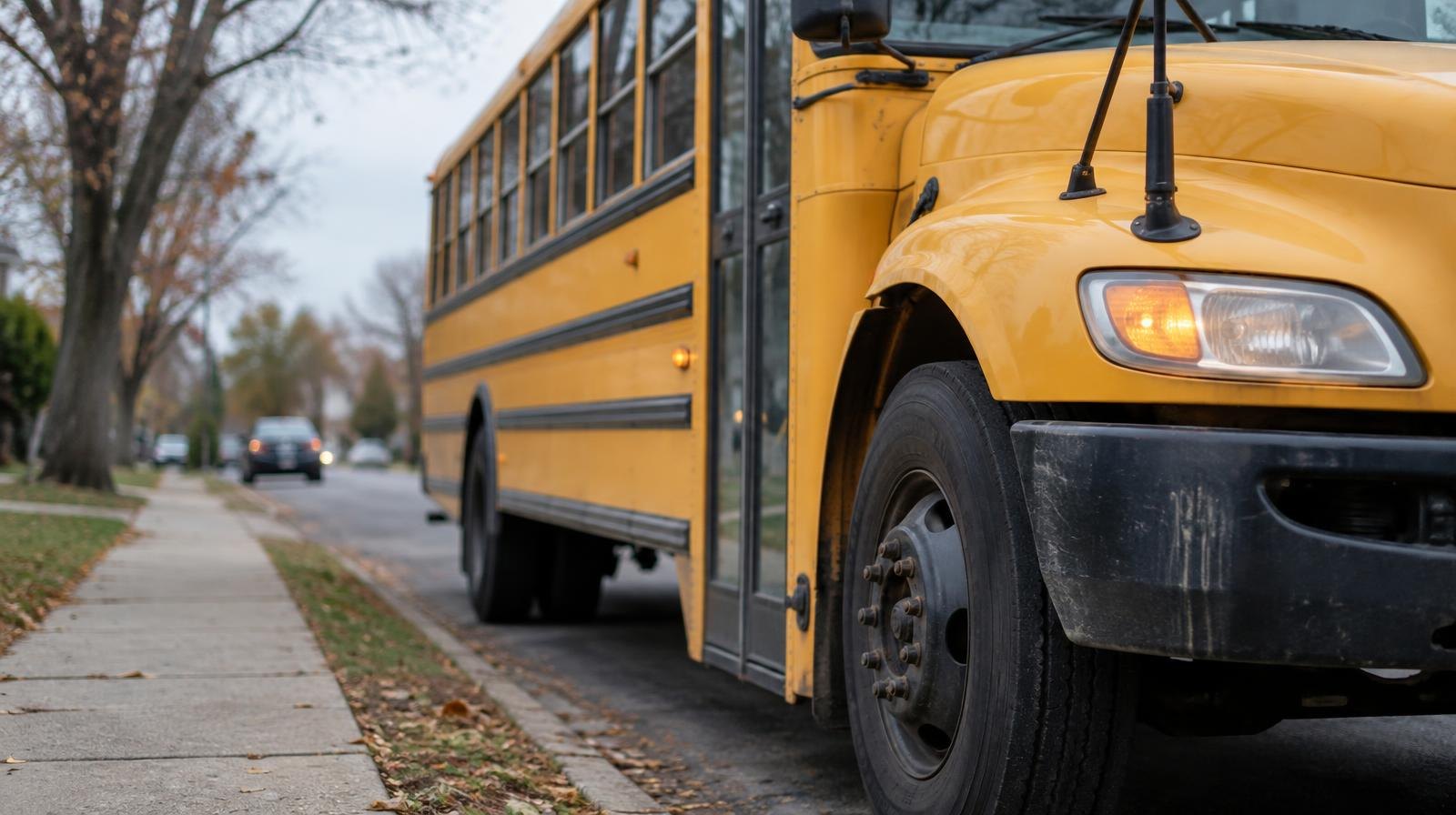
Marcia Cannon-Clark waited more than two hours on Oct. 27 for a school bus that was supposed to pick up her 10-year-old daughter Beverly at 7:46 a.m. in Brightwood, Northwest D.C.
It never came in time. Cannon-Clark loaded Beverly, who is non-verbal and uses a wheelchair, into the family minivan and drove her to school. Beverly arrived more than an hour late, 7News reported. The bus showed up at 10:17 a.m., long after the family had left.
Cannon-Clark said she later learned from a bus attendant that the delay was caused by a malfunctioning door on the bus. That kind of breakdown is what prompted her and her husband, David Clark, to join a class-action lawsuit against the District.
Filed in March 2024, the suit accuses the Office of the State Superintendent of Education Division of Student Transportation (OSSE-DOT) of failing to provide safe, reliable buses for children with disabilities. The case has expanded to include nearly 4,000 students, according to WUSA9. A judge has ruled the lawsuit can move forward. WUSA9 identified the court as D.C. Superior Court, while 7News described the ruling as coming from a federal judge.
What families face
Beverly was born with a benign brain tumor and has hydrocephalus, a neurological disorder that causes fluid buildup in the brain. She requires medication to prevent seizures, so bus delays can carry serious health consequences, 7News reported.
"Absolutely horrible. Very disappointing. And I believe the drivers. They know firsthand," Cannon-Clark told 7News.
Kathy Zeisel, an attorney with Children's Law Center who represents the Clark family and about 4,000 district parents, was at the Clark home that morning.
"What we see here this morning is one of the key reasons why we filed this lawsuit," Zeisel told 7News.
Drivers raise safety alarms
The bus problems go beyond tardiness. In a separate 7News investigation published Oct. 26, dozens of drivers described an aging fleet plagued by bad brakes, poor alignment and broken safety lights. The fleet runs 317 bus routes each school day, transporting more than 3,100 students with disabilities, according to that report.
Margaret Morton, a driver with 40 years of experience, told 7News the District's four bus depots house vehicles so poorly maintained that drivers routinely operate buses with "Check Engine" lights on. Morton also cited buses that have to be jump-started each morning and transmissions so rough they jerk passengers from their seats.
An OSSE-DOT spokesperson told 7News that 29 new buses entered service this year and 10 more are in the purchasing pipeline. Drivers said that is not enough to replace the buses sitting idle with "Out of Service" tags at city depots. The agency disputed the drivers' count of sidelined buses but did not provide its own figure. A spokesperson said three to four buses are removed from service daily for safety concerns.
Morton told 7News that managers pressure drivers into operating buses with known maintenance issues. The OSSE-DOT director told 7News the agency's mission is transporting students with special needs and that safety concerns must be addressed.
Lawsuit and agency response
The lawsuit alleges that late arrivals, missed pickups and inconsistent service have disrupted students' access to education and, in some cases, affected their health, according to WUSA9.
When 7News asked OSSE-DOT about the Clark family's delay, a spokesperson said the agency "cannot comment on specific students to maintain student privacy."
In a statement included in a 7News report published in February, OSSE said it serves more than 3,600 students who require bus transportation as part of an individualized education program, or IEP. The agency also said it has been testing BusWhere, an app to help parents track their child's bus in real time. Cannon-Clark told 7News she does not have the app.
Attorneys say they are preparing for trial. Zeisel told 7News a previous lawsuit, from 1996 to 2012, tried to fix the system, and called this case the first since then to seek system-wide change.