D.C. voters will rank candidates for two at-large Council seats on Nov. 3, but each ballot will count toward only one winner.
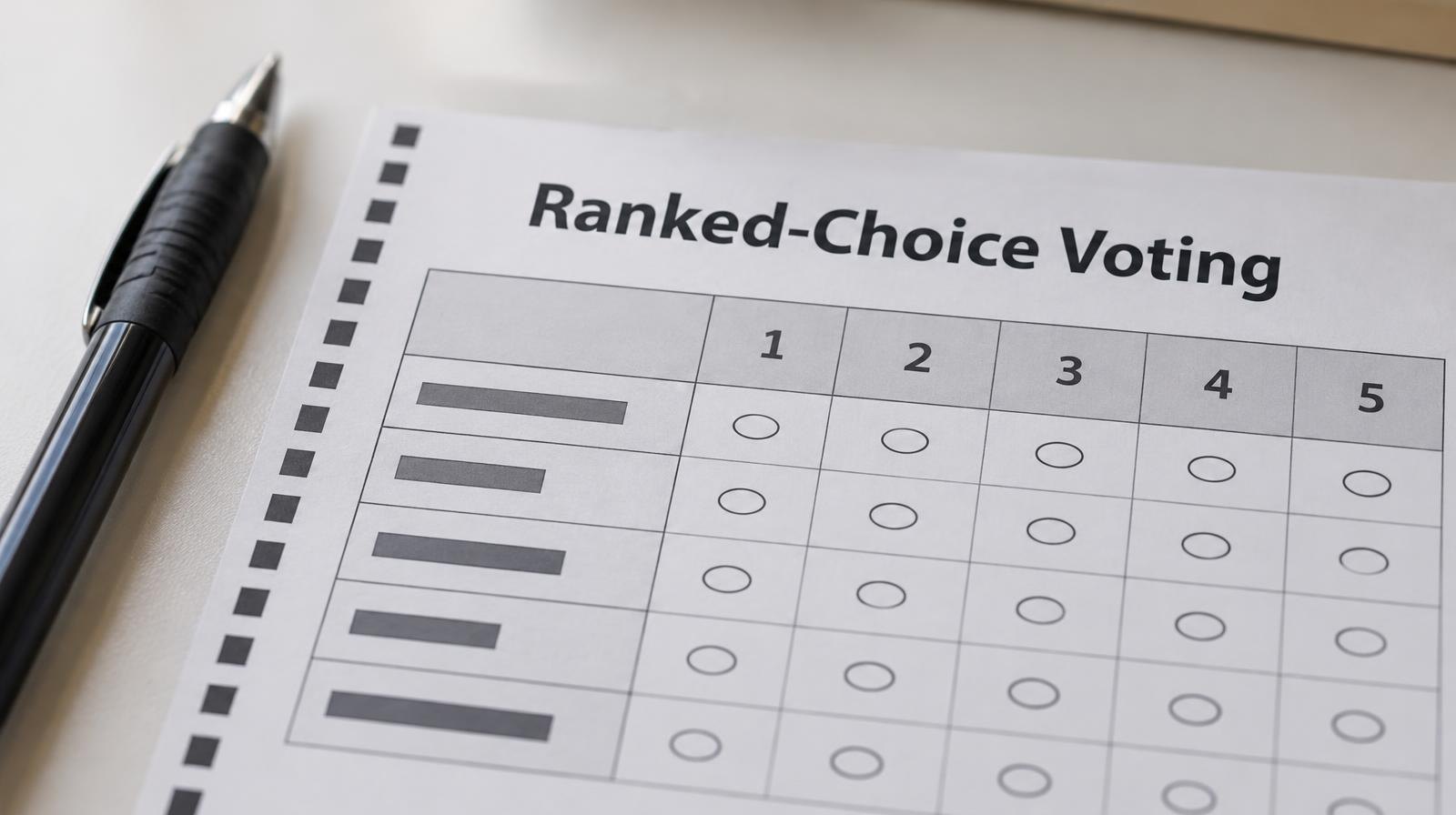
The problem stems from how the District implemented ranked-choice voting, or RCV. Under the old system, voters picked two candidates and each got a vote. Under RCV, voters rank candidates in preference order, and election officials count each ballot for its highest-ranked active candidate. The lowest vote-getter is eliminated round by round until two candidates remain.
That means a voter who ranks a front-runner first will never have lower-ranked choices counted toward the second seat. The ballot stays locked with the surviving candidate. A ballot can also count for neither winner if every ranked candidate is eliminated.
Council Chairman Phil Mendelson identified the flaw in a July 9 memorandum requesting emergency legislation. Mendelson wrote that voters may not meaningfully participate in the selection of both at-large members.
His proposed fix would have counted all ballots twice using the same rankings. Officials would first tally votes to elect one at-large member, remove that winner, then recount all ballots to choose the second. The change would not have altered the ballot design or required voters to rank candidates more than once.
Mendelson sought emergency action at the Council's July 14 meeting, the last session before summer recess. He withdrew the bill before it reached a vote. Councilmembers objected to changing election rules mid-campaign and to altering Ballot Initiative 83, the voter-approved measure that introduced RCV with 73% support in 2024. A discussion with Board of Elections officials also exposed drafting problems.
"Absent better language, we were not in a position to move forward," Mendelson told councilmembers, as the Hill Rag reported.
The flaw matters most in the at-large race because it elects two winners from a single pool. Four candidates are on the Nov. 3 ballot, according to WTOP's voter guide: Oye Owolewa (Democrat), at-large councilmember Elissa Silverman (Independent), Darryl Moch (DC Statehood Green) and Darrell Green (Republican). By D.C. law, at least one winner must come from outside the majority party on the Council.
No at-large candidate or Board of Elections official has publicly addressed the single-count limitation.
In every at-large general election from 2016 through 2024, the Democratic nominee finished first. In 2024, Robert White received 243,528 votes; Christina Henderson, an independent, won the second seat with 90,814. Under RCV's single tabulation, voters who back the leading candidate may have no say in who fills the other seat.
A February 2026 commentary in the Washington Socialist, published by Metro DC Democratic Socialists of America, warned the system could lock Democratic voters' ballots with their party's nominee and hand the second seat to a smaller coalition of non-Democratic voters. The authors noted D.C. chose a single-winner RCV method rather than the single transferable vote system used for multi-winner races in cities like Cambridge, Massachusetts, and Portland, Oregon.
No Council action to fix the tabulation method is scheduled before the election. Online and mail voter registration closes Tuesday, Oct. 13. Early voting runs Oct. 26 through Nov. 1, from 8:30 a.m. to 7 p.m. Election Day polls open 7 a.m. to 8 p.m. on Nov. 3.