U.S. District Judge Tanya Chutkan blocked the Trump administration from breaking ground on a 250-foot arch near Arlington National Cemetery, issuing a 14-day restraining order Thursday, Nov. 5.
The order landed just over an hour after the National Capital Planning Commission (NCPC) voted 8-4 to approve the project, as first reported by the Associated Press. The vote capped a roughly nine-and-a-half-hour virtual hearing where scores of witnesses opposed the structure.
For D.C. and Virginia residents, the restraining order means no construction, excavation, road closures or land disturbance at Memorial Circle for at least two weeks.
What the judge said
Chutkan wrote that Virginia and the District of Columbia had shown construction would cause real, immediate harm. She cited traffic disruptions and costs to D.C.'s Department of Transportation for managing detours and crashes.
"The harm is certain," Chutkan wrote.
In a 33-page ruling, Chutkan found the plaintiffs are likely to succeed in showing the federal government did not follow required legal processes, according to CBS News. She also rejected the administration's argument that a 1925 law authorized the project.
"The sheer improbability that a 100-year-old statute would contain authority, unknown to every previous administration, to erect a 250-foot arch at a principal location in the Nation's capital indicates how far defendants must stretch to justify this project," Chutkan wrote.
The judge ordered the government to file a compliance status report by Monday, Nov. 9.
A divided commission
The NCPC vote split along federal and local lines, according to the AP. Commissioners aligned with the administration voted in favor. Those representing the city of Washington voted against.
NCPC Chairman Mark Paoletta, who also serves as general counsel for the White House Office of Management and Budget, opened the hearing with praise for the project. He called it a "national disgrace" that a memorial arch had not been placed at the site, citing the 1925 law.
D.C. Council Chairman Phil Mendelson, who also sits on the commission, said the project had not received required congressional approval and Congress had not appropriated money for it. The plan submitted to the commission did not include a reference to military use cited by the administration, Mendelson said.
"We cannot approve final site and building plans until we have the final site and building plans," Mendelson said during the hearing.
Public opposition
More than 130 people signed up to speak during the virtual hearing, DC News Now reported. The livestream crashed at one point. The commission received more than 1,300 public comments, most in opposition, according to CBS News.
Marine veteran Jimi Shaughnessy told the commission that "a dominating arch with a carnival-like atmosphere of tourists, food trucks and buses is abhorrent and insulting to those who gave all and to their families."
Rep. Jared Huffman, a California Democrat set to chair the House Natural Resources Committee, called the project "illegal" during the hearing and said it would "disrupt the solemn connection" between the Lincoln Memorial and Arlington National Cemetery.
Lawsuits pile up
The restraining order stems from multiple legal challenges. A group of Vietnam War veterans filed suit in February. Virginia Attorney General Jay Jones and D.C. Attorney General Brian Schwalb filed a joint lawsuit on Oct. 31, according to a Virginia attorney general's office statement. Arlington County officials have also sued, arguing the government failed to complete a mandatory environmental review.
Chutkan consolidated the D.C./Virginia lawsuit with the veterans' case and ordered a joint briefing schedule.
A Department of the Interior official testified during the NCPC hearing that no permits for excavation or construction had been obtained. It remains unclear how much the arch would cost or who would pay for it.
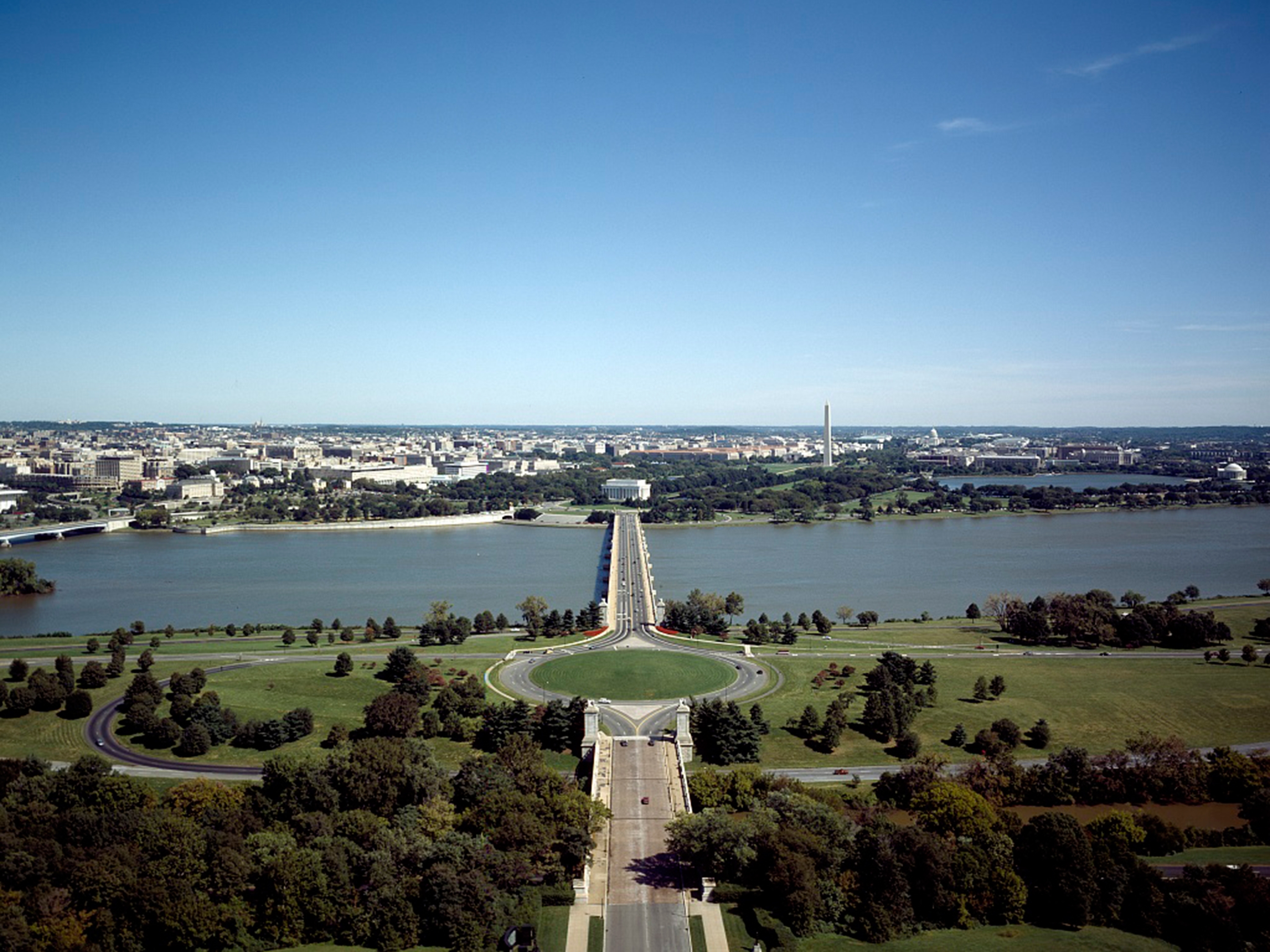
The proposed structure would stand 166 feet tall, topped with three gilded figures bringing its total height to 250 feet. It would sit at Memorial Circle, across the Potomac from the Lincoln Memorial, and is expected to take three years to build.