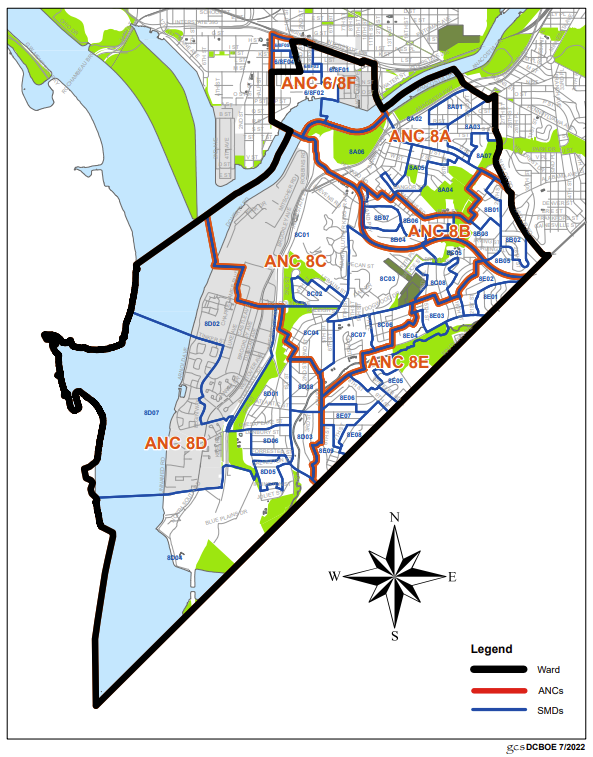
Young people experiencing housing insecurity in Wards 7 and 8 must cross the Anacostia River to reach any of the District's four youth drop-in centers, even though those two wards are home to 42% of D.C.'s housing-insecure population.
The service gap, reported by Washington City Paper on Aug. 10, comes as housing voucher funding remains exhausted until the fiscal year resets in October and weeks before the 2026 Youth Count DC is scheduled to measure the scope of the problem in September.
The D.C. Department of Human Services operates four youth drop-in centers for residents ages 18 to 24: Zoe's Doors at 900 Rhode Island Ave. NE in Ward 5; Latin American Youth Center at 3045 15th St. NW in Ward 1; SAMU at 650 Pennsylvania Ave. SE in Ward 6; and Sasha Bruce Youthwork at 741 8th St. SE, also in Ward 6. That list comes from DHS's own extreme-heat resource guide.
The sole DHS facility east of the river is the 801 East Day Center at 2722 Martin Luther King Jr. Ave. SE in Ward 8. It serves all ages and shares space with the 801 East low-barrier men's shelter, a setting City Paper reported can be intimidating for youth seeking help, particularly non-male youth.
Who's affected
A 2023 Urban Institute report found that 12% of all D.C. residents experience housing insecurity, roughly 82,452 people. Transitional-aged youth, defined by HUD as ages 18 to 24, account for about 12% of that population. Among housing-insecure youth, 90% of single youth and 93% of those who are pregnant or parenting identify as Black. Ward 7's population is 79% Black; Ward 8's is 81% Black.
The data are nearly three years old but remain the most recent comprehensive study available on ward-level housing insecurity. The 2025 Youth Count found youth housing insecurity dropped about 40% from 2024, but periods of instability are lasting longer, with most counted youth experiencing homelessness or unstable housing for more than six months at a time.
Budget picture
The D.C. Council unanimously passed the fiscal year 2027 budget on June 23, adding $28.2 million to support 469 existing housing vouchers and funding 190 vouchers for families exiting the Rapid Rehousing program, according to Street Sense Media. The budget restored $1.5 million for permanent supportive and extended transitional housing for youth and created a $250,000 grant for the Sasha Bruce Youthwork drop-in center.
It did not add new vouchers to the existing pool. That leaves 521 households at risk of losing housing as Biden-era Emergency Housing Vouchers expire.
Ward 7 Councilmember Wendell Felder warned about the council's reliance on one-time funds at the June 23 vote, according to Street Sense Media: "If we do not begin to make difficult decisions in the near future, we may very well find ourselves in the same position next year, facing many of these same challenges."
How providers are adapting
SMYAL, an LGBTQ+ youth services organization, doubled its Rapid Rehousing units for homeless and housing-insecure youth from 20 to 40 in 2026. The program covers first month's rent, security deposit, moving assistance, furniture and rental assistance for up to 12 months.
"Vouchers almost being nonexistent has been a massive limitation in terms of what we are able to provide for our young folks, but we have been able to kind of find different avenues, if you will, of safe and stable exits for our clients," Liz Jaramillo, SMYAL's director of youth housing, told City Paper.
The Wanda Alston Foundation is pursuing eight pathways to housing independence for youth, including employment counseling paired with Affordable Dwelling Units, below-market-rate homes restricted to lower-income residents.
DHS did not respond to a request for comment on why no youth drop-in centers serve Wards 7 and 8.
Separately, DHS Director A.D. Rachel Pierre said in May, when the agency released its 2026 Point-in-Time Count results showing a 4.4% overall increase in homelessness, that the District had shifted to a more targeted approach matching each family with a tailored housing resource.
What's next
The 2026 Youth Count DC, conducted by the Community Partnership on behalf of DHS, is scheduled for September. Its results will provide updated ward-level data on youth housing insecurity. The fiscal year resets Oct. 1, when new voucher funding becomes available.