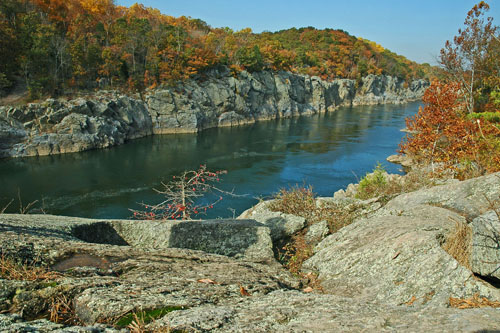
The Potomac River shows no lasting damage from the massive sewage spill that fouled the waterway in January, DC Water announced Wednesday, Oct. 7.
The declaration caps more than six months of daily water sampling that began after the Potomac Interceptor sewer line collapsed Jan. 19, sending more than 240 million gallons of raw sewage into the river. E. coli levels at the spill site initially measured 10,000 times above the recreational safety limit, according to the Potomac Conservancy. The EPA called the event an ecological crisis of "historic proportion," NBC News reported.
DC Water Interim General Manager Matthew Brown said the agency expanded its monitoring specifically because of public concern.
"That is why we did more testing. These results are reassuring. They reconfirm what earlier testing indicated – that the river has returned to normal," Brown said in the Oct. 7 announcement.
Crews collected samples at up to 10 locations upstream and downstream of the spill, testing for E. coli from Jan. 29 through Sept. 10, according to DC Water's monitoring page. In August, the agency broadened its testing to include dissolved oxygen, nutrients and metals at six Maryland sites. All results fell within normal ranges for the river, DC Water said in its press release.
The spill shut down fishing and water recreation along the Potomac for nearly two months. Montgomery County lifted its last remaining shoreline and sediment health advisories, including around Minnie's Island, after sediment bacteria levels returned to acceptable levels, according to a DC Water August update. The island has since reopened for recreational use.
The 54-mile Potomac Interceptor normally carries about 60 million gallons of wastewater per day from parts of Northern Virginia, Maryland and the District to DC Water's Blue Plains treatment plant. The Jan. 19 collapse occurred near the Clara Barton Parkway and Lock 10 of the C&O Canal in Cabin John, Maryland.
The water quality all-clear does not resolve ongoing legal matters. The EPA and the Department of Justice filed a Clean Water Act lawsuit against DC Water in April, and Maryland has also sued the utility over the spill. DC Water's board removed then-CEO David Gadis after the January disaster, and Brown stepped in as interim leader.
Physical repairs to the pipeline continue. DC Water has finished two of four emergency repair projects, completing work on a 600-foot section near Dulles International Airport and a 490-foot section at Broad Run in Loudoun County. Crews are still working at Pennyfield Lock and along Clara Barton Parkway near the Maryland-D.C. border, according to a September DC Water update.
The Water Resources Development Act, which cleared House and Senate committees unanimously, includes $200 million to repair and fortify the Potomac Interceptor, according to the Potomac Conservancy. DC Water is also pursuing a 10-year, $625 million rehabilitation of the full pipeline.
DC Water advises residents to stay out of the river for 48 to 72 hours after heavy rain, when bacteria levels in urban waterways spike from runoff and wildlife sources. Full testing results are posted at dcwater.com/water-quality-monitoring.