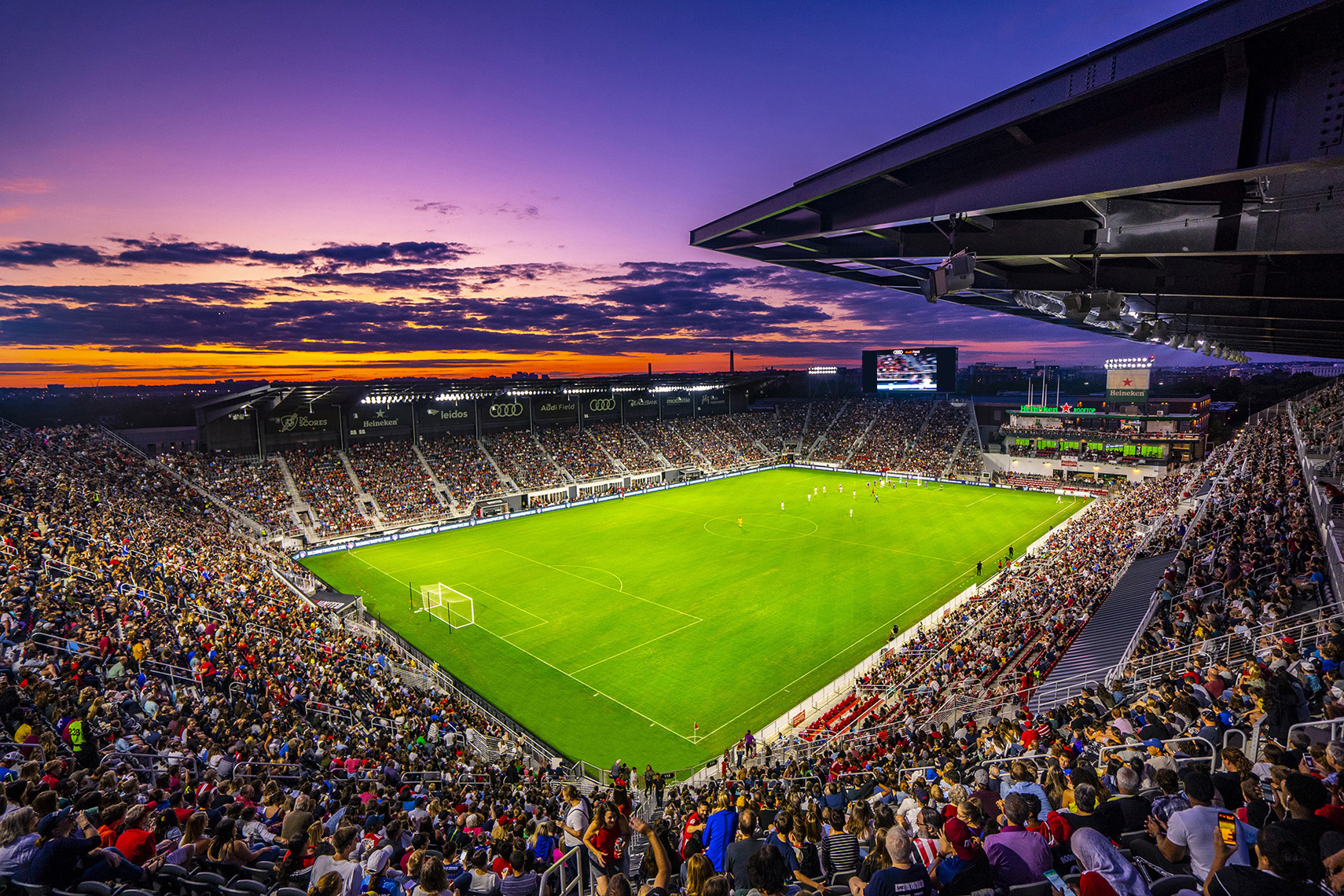
D.C. Council Chairman Phil Mendelson wants the District to spend $300 million to help expand Audi Field into a year-round, roofed stadium. Mayor Muriel Bowser says the city cannot afford it.
The Council will hold a public hearing on the proposal Friday, Oct. 23.
Mendelson introduced the legislation in July. The $620 million plan would add a climate-controlled roof and roughly 8,000 seats to the Buzzard Point soccer stadium.
Audi Field currently holds about 20,000 fans for D.C. United, the Washington Spirit, DC Power FC and the D.C. Defenders. Under the bill, D.C. United would pay at least $320 million plus any cost overruns, WJLA reported.
The District's $300 million share would come at about $60 million a year over five years, funded partly by a 4.25% ticket tax surcharge and stadium sales taxes, according to Field of Schemes.
"There is no question that Audi Field needs to get larger," Mendelson told WJLA. "Washington Spirit is at capacity, and they want to see more seats."
The bill also requires D.C. United to build 467 housing units near the stadium, including 148 affordable units and 122 for seniors, WUSA9 reported.
Bowser pushed back on Sept. 2, telling reporters the city already owns Capital One Arena, which is undergoing a $1 billion renovation. The city should not be "cannibalizing one for the other," she said, according to WTOP.
The mayor plans to introduce her own legislation this fall for a separate renovation of Nationals Park, which opened in 2008, the Washington Business Journal reported. No price tag has been released.
Ward 6 Councilmember Charles Allen, whose district includes Audi Field, called the bill an "open-ended liability" for D.C. He said it lacks a cap on the city's contribution, offers no guarantee the housing will be built and contains no community benefits agreement.
Advisory Neighborhood Commission 6D, which covers Buzzard Point, voted 5-0 on July 20 to send Mendelson a letter of concerns about the expansion. The commission cited potential impacts on traffic, noise, parking and security costs for surrounding residents.
The price tag lands on top of what the Washington Informer reported is more than $1.6 billion the District has committed to sports venues since 2015. That total includes $515 million for Capital One Arena and $877 million toward the Commanders stadium at the RFK campus.
D.C. United has tried to build political support for the deal. The club finalized a project labor agreement with the Baltimore-DC Metro Building Trades union in September, Axios reported. That move mirrors the labor deal that helped secure Councilmember Janeese Lewis George's vote on the RFK stadium project, according to Axios.
Mendelson told WTOP in September that the bill was a "first step" and changes may come after the Oct. 23 hearing.