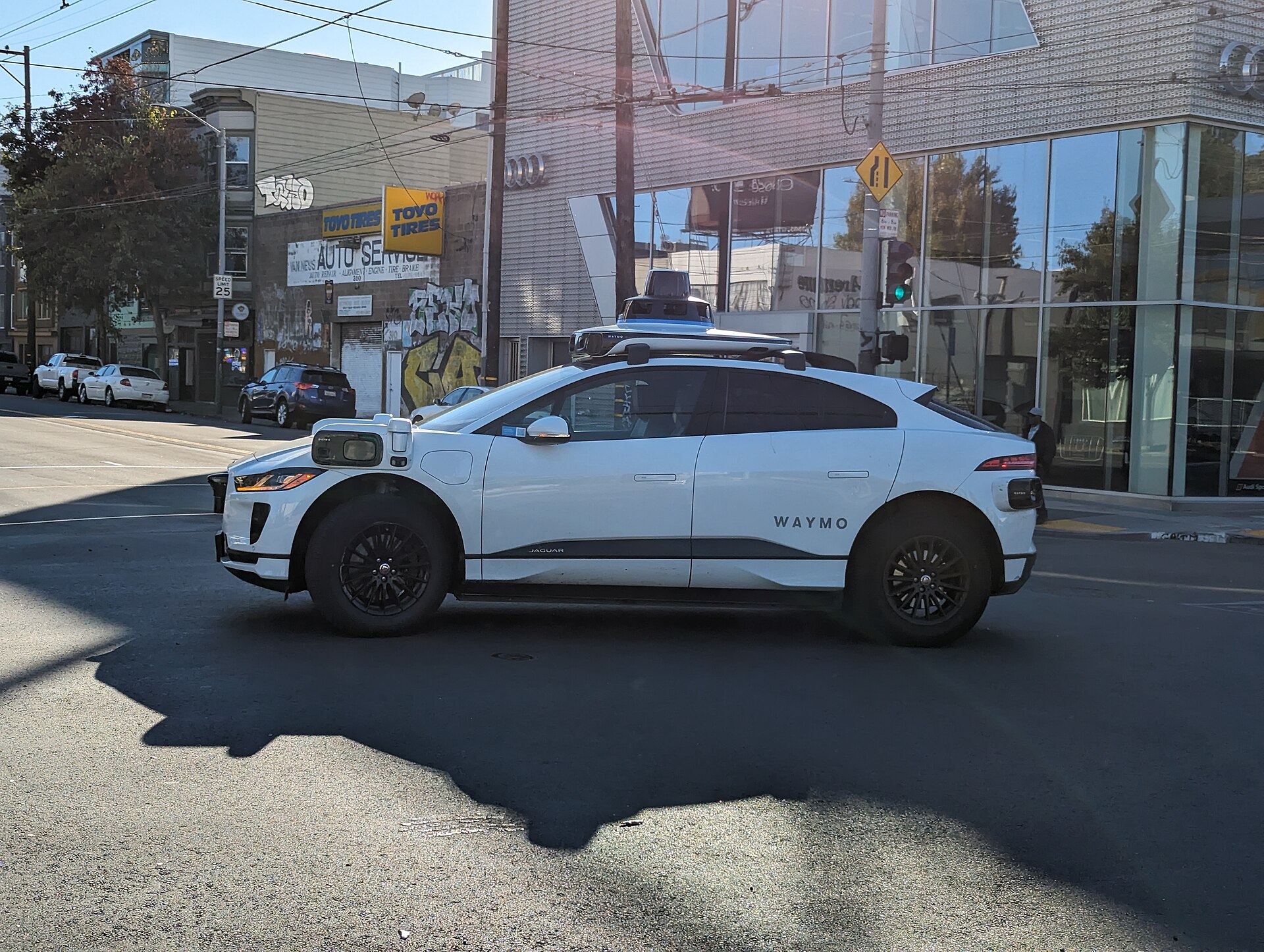
Waymo vehicles are already rolling through Arlington neighborhoods, but no jurisdiction in the Washington region has a legal framework to govern commercial robotaxis.
The self-driving car company confirmed in late October that it is mapping residential streets in Arlington and Alexandria using human-driven vehicles, ARLnow reported. Waymo spokesperson Ethan Teicher told the outlet the company is "advocating for a statewide framework" but had no launch plans to share.
That framework does not yet exist. Virginia has no specific legislation or regulation governing autonomous vehicle (AV) testing, permitting or deployment, according to the Virginia Association of Counties, as cited by ARLnow. The state has not determined which agency has oversight, whether a licensed driver must be present, what insurance is required or how law enforcement should interact with the vehicles.
Arlington County Board Chair Matt de Ferranti told ARLnow that county staff have been monitoring a state legislative working group's discussions. He said the county wants "to ensure that public safety remains at the forefront of all decision-making" as the region prepares for the technology.
Virginia's working group delivered its report
Virginia’s Autonomous Driving Work Group includes five delegates, three senators and representatives from state transportation, motor vehicle and police agencies, along with other stakeholders. Its report was due Nov. 1, 2026, but the General Assembly’s reporting website currently lists it as overdue.
At an Aug. 28 meeting, the group agreed the state should regulate AVs and that the initial framework should focus on commercial vehicles, according to the Virginia Mercury. Members backed a pilot period with the DMV in charge of permits.
But key safety questions remained unresolved. Members disagreed over whether to set specific safety benchmarks upfront or let the DMV decide based on operating conditions. They split on whether to require comprehensive, real-time data from AV operators or limit reporting to match existing federal standards. They also debated whether first-responder AV training should be mandatory and statewide, the Virginia Mercury reported.
De Ferranti said the county was "still reviewing the recent recommendations" and planned to press its case through Arlington's two state senators and three delegates when the General Assembly convenes Jan. 13 for a 45-day session.
D.C. bill stalled after committee deadlock
Across the Potomac, D.C. Council member Charles Allen's robotaxi bill deadlocked 3-3 in the Transportation Committee in November, Axios reported. Mayor-elect Janeese Lewis George, along with Council members Zachary Parker and Elissa Silverman, voted against it. They cited concerns about street safety and job losses.
Allen had revised the bill to cut a proposed per-mile tax on robotaxis to 7.5 cents and lower upfront permitting fees from $6 million to $15,000 plus $750 per vehicle. The bill would have capped operators at 200 vehicles and delayed commercial service until 2028.
D.C.’s separate Autonomous Vehicle Observation Zone Challenge has selected AIWaysion, working with Parsons Corporation, to deploy roadside sensing technology that will independently monitor autonomous vehicles. US Ignite announced the selection Sept. 1. The $50,000 pilot will study two intersections along the M Street SE/SW corridor for three to six months, with deployment scheduled to begin in January 2027.
Safety incidents raise the stakes
Federal investigators are examining two Waymo incidents that highlight the accountability questions facing the region. On Jan. 23, a Waymo vehicle operating without passengers struck a 9-year-old pedestrian in a Santa Monica, California, school zone, according to the National Transportation Safety Board. The vehicle was traveling 17 mph. The student reported minor injuries.
Separately, the NTSB found that a Waymo vehicle in Austin, Texas, passed a school bus with its stop arm extended on Jan. 12 after a remote operator in Michigan incorrectly told the car the bus did not have active signals. Austin's school district reported multiple similar incidents during the 2025-2026 school year. Waymo recalled software on 3,067 vehicles in December 2025 to fix the school-bus behavior.
Both investigations remain open.
A patchwork with no center
Because Virginia is a Dillon Rule state, localities have little independent authority to regulate AVs on their own. Arlington's draft 2027 legislative package includes a transportation priority asking the state to "consider the emerging challenges posed by autonomous vehicles" while preserving local authority to address transit needs, according to county records.
Maryland's legislature also ended its session in April without advancing AV legislation, as Greater Greater Washington reported.
Waymo policy adviser Rich Harrington told state officials that going from mapping to a fully driverless ride-hailing service takes at least a year, according to ARLnow. Virginia's General Assembly session begins Jan. 13.